

Why great leaders move hearts before they move metrics
In today’s dynamic workplaces, technical expertise alone does not create influence. What truly differentiates high-impact leaders is their ability to inspire.
But inspiration is not accidental. It is psychological.
Understanding the psychology behind inspirational leadership helps organisations build cultures of trust, performance, and long-term engagement.
What Is Inspirational Leadership?
Inspirational leadership is the ability to influence others by activating intrinsic motivation — the internal drive rooted in meaning, identity, and emotional connection.
Unlike transactional leadership (reward and punishment), inspirational leadership:
- Connects work to purpose
- Aligns personal and organisational values
- Builds trust through authenticity
- Creates emotional resonance
According to Gallup’s 2025 Global Workplace Report:
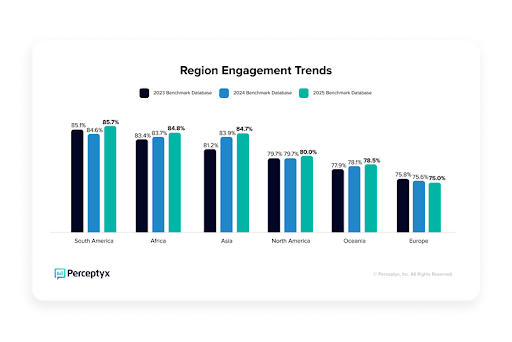
- Only 23% of employees worldwide are actively engaged
- Managers account for 70% of variance in team engagement
- Inspired employees are 2.7x more likely to exceed performance expectations
The psychological impact of leadership is measurable — and powerful.
The Neuroscience of Inspiration
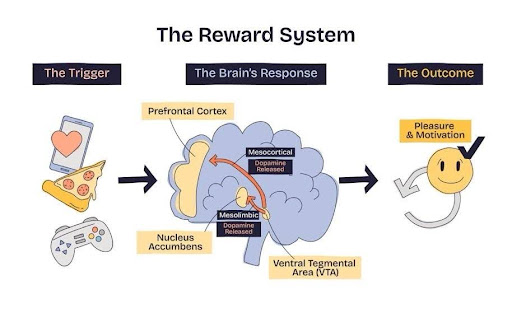
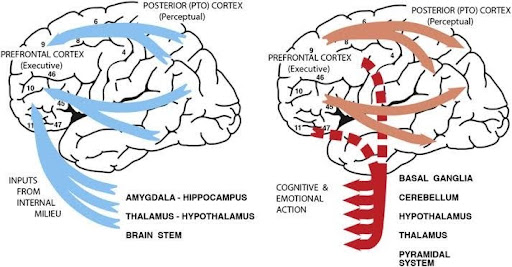
Inspirational leadership triggers measurable brain responses:
1. Dopamine – The Motivation Molecule
- When leaders articulate meaningful goals, the brain releases dopamine.
- This enhances focus, goal pursuit, and optimism.
- Clear vision literally fuels motivation.
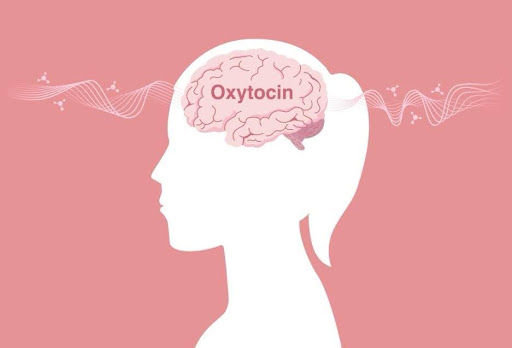
2. Oxytocin – The Trust Hormone
- Transparent communication and empathetic behavior stimulate oxytocin release.
- This strengthens bonding and collaboration within teams.
- Trust reduces cognitive stress and increases creative risk-taking.
3. Prefrontal Cortex Activation
- Vision-driven conversations activate higher-order thinking — strategy, planning, and problem-solving.
- Employees move from reactive to proactive thinking.
4. Mirror Neurons and Emotional Contagion
- Humans subconsciously mirror emotional states.
- A leader’s calm, confident presence spreads psychological stability.
- Inspiration is not just emotional — it is biological alignment.
The 5 Psychological Pillars of Inspirational Leadership
1️. Purpose-Driven Vision
People are not motivated by tasks. They are motivated by meaning.
Leaders who clearly communicate why work matters activate intrinsic motivation — the most sustainable form of drive.
Research from Harvard Business Review (2025) shows purpose-driven organisations outperform competitors by up to 42% in employee retention.
2️. Emotional Intelligence (EQ)
Daniel Goleman’s work on emotional intelligence highlights five core components:
- Self-awareness
- Self-regulation
- Motivation
- Empathy
- Social skill
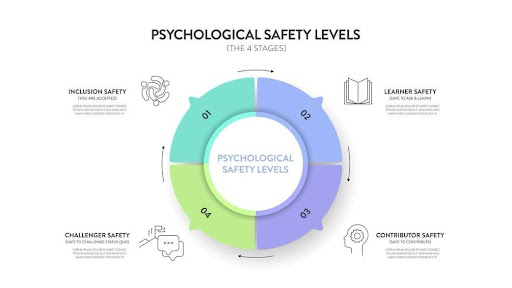
Leaders high in EQ create psychological safety — a key predictor of team innovation.
Google’s Project Aristotle found psychological safety to be the #1 factor in high-performing teams.
3️. Authenticity and Trust
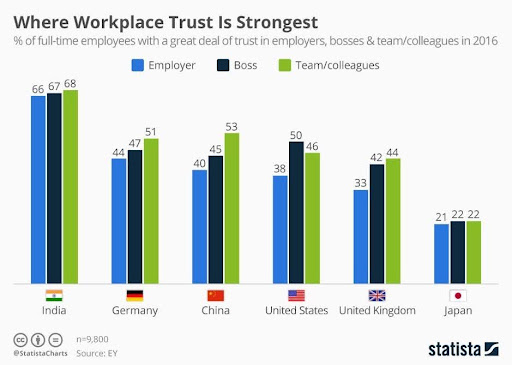
Trust is the foundation of inspiration.
Edelman’s Trust Barometer (2025) reports that:
- 63% of employees expect CEOs to lead on societal issues
- Trustworthy leaders increase discretionary effort by 76%
Authenticity builds credibility. Credibility builds influence. Influence builds impact.
4️. Storytelling and Emotional Contagion
Stories activate both the emotional and logical parts of the brain.
When leaders share personal narratives:
- Memory retention increases
- Emotional resonance deepens
- Shared identity strengthens
Storytelling transforms abstract goals into lived experiences.
5️. Empowerment and Autonomy
Self-Determination Theory identifies three core psychological needs:
- Autonomy
- Competence
- Relatedness
Inspirational leaders design environments where people feel capable, trusted, and connected.
Micromanagement suppresses motivation. Empowerment amplifies it.
Why Inspirational Leadership Matters in 2026
In hybrid and AI-augmented workplaces, human-centred leadership is no longer a “nice-to-have” — it is a competitive necessity.
Automation, AI copilots, predictive analytics, and workflow tools can optimise speed, reduce error, and increase efficiency. They can summarise meetings, draft reports, analyse performance data, and even forecast trends.
But they cannot:
- Build trust during uncertainty
- Read emotional undercurrents in a tense meeting
- Resolve interpersonal conflict with empathy
When these are absent, disengagement increases.
According to Deloitte’s 2025 Global Gen Z & Millennial Survey:
- 74% of Gen Z professionals say purpose influences where they choose to work
- Career growth and learning rank among the top three retention factors
Modern professionals — particularly Gen Z — prioritise:
- Meaningful work that contributes to society
- Ethical and socially responsible leadership
Retention today is not secured by salary alone. It is secured by purpose, trust, and growth.
Leaders who fail to inspire will struggle to retain top talent because employees now evaluate organisations not just by compensation — but by culture, credibility, and contribution.
Practical Strategies to Become an Inspirational Leader
For organisations:
- Embed purpose into performance conversations
- Train leaders in emotional intelligence
- Reward empowerment, not control
For individuals:
- Clarify your personal leadership philosophy
- Develop reflective practices
- Lead with values before authority
The Bottom Line
Inspirational leadership is not charisma. It is psychological alignment.
When leaders connect purpose, emotion, trust, and autonomy, they activate the deepest drivers of human behavior.
Inspiration is not about being the loudest voice in the room.
It is about being the clearest source of meaning.
And in a world of rapid transformation, meaning is the most powerful leadership currency we have.