

There is one trait of leadership that continues to provide differentiating results between success and failure in the era of AI empowerment, digitalization and measurement; Emotional Intelligence (EI).
Unfortunately, in executive circles, EI is still not highly valued despite decades worth of discussion around the importance of empathy, psychological safety and people-centered leadership. This is ironic given that companies are investing heavily in automation and analytics but that employees are yearning for a leader who listens, empathizes, communicates effectively and leads with emotional awareness.
According to trends identified in 2026, organizations are experiencing increased stress levels, emotional exhaustion and disconnection due to increased pressures placed on them resulting from the work environment.
Why EI Matters Now More Than Ever
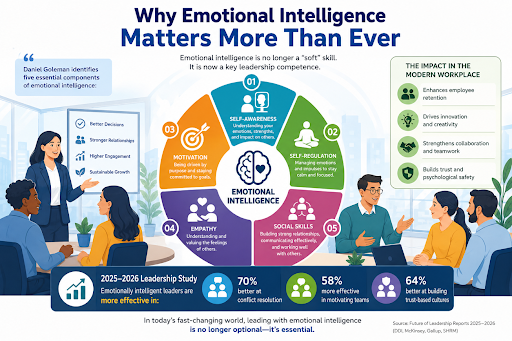
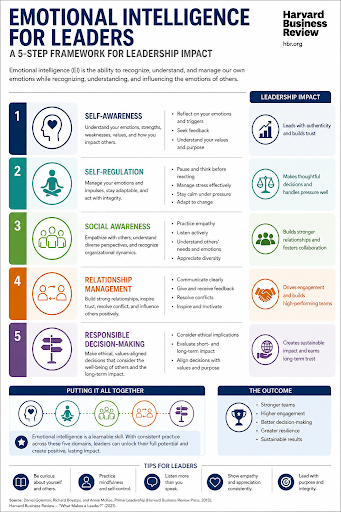
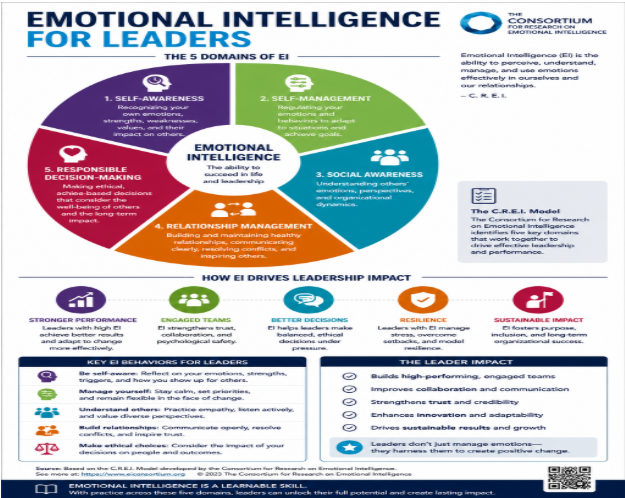
EI is no longer considered to be just a “soft skill” but instead has become a core competency of leaders. Daniel Goleman describes EI as having five key elements:
- Self-awareness
- Self-regulation
- Motivation
- Empathy
- Social Skills
Within modern workplaces, these components of EI will continue to shape retention rates and new initiatives related to innovation.
Research conducted in 2025 and 2026 shows that leaders with high levels of EI were more successful than others in resolving conflict within their teams, encouraging teamwork as well as building a culture of trust in their respective organizations.In contemporary workplaces, these skills impact all aspects, including retention and innovation practices.
An important study on future leadership conducted in 2025 and 2026 revealed that emotionally intelligent leaders were more successful in handling conflicts, motivating teams, and fostering trust-based organizational cultures.
The Leadership Crisis of 2026
Today’s workplace is facing an upcoming “human recalibration” according to experts from many fields.
AI has increased productivity but has also led to:
- Greater employee stress
- More digital burnout
- Reduced emotional connection
- Increased work-related fatigue
The latest research has shown that Gen Z may have some of the highest global burnout rates and they value emotional well-being more than professional advancement.
Experiences of leaders have shifted significantly over the last 15 years and employees now want someone to coach them rather than simply ordering them around.
Why Many Organisations Still Underrate EI
While there is plenty of data supporting the benefits of emotionally intelligent leadership to organizations, too many organizations are focused on:
- Technical competence versus empathy
- Performance over well-being
- Hierarchy versus collaboration
Moving up the leadership ladder still depends on operational performance rather than emotional intelligence. This could have serious consequences:
Top-performing employees could become incompetent leaders if they can’t manage their social dynamics, emotions and relationships.
New data shows that emotionally unintelligent leadership will lead to:
- Resenteeism
- Quiet quitting
- Bad moods
- Higher intent to leave the organization
Emotional Intelligence and the AI Era
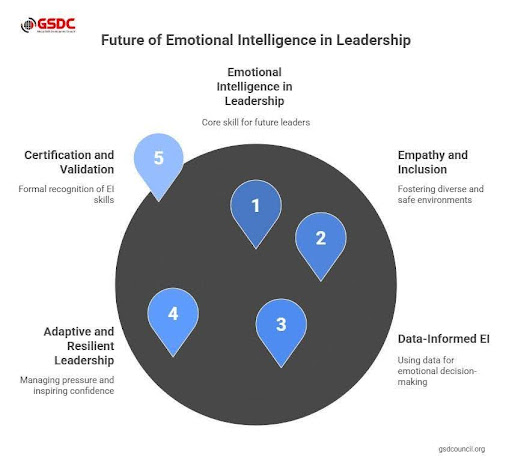
AI has changed how important emotional intelligence is today; with AI performing the very repetitive (or analytical) tasks humans previously did, the human attributes will be how individuals will compete against the AI’s efficiency.
For those leaders in the future to distinguish themselves from AI, they must possess the following attributes:
- Empathy
- Ethics in their decision-making
- Connection to others
- Ability to adapt
- Ability to cope with a crisis
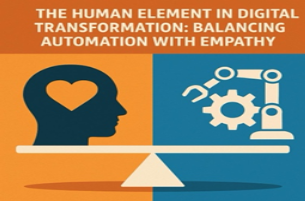
According to leadership experts in 2026 and beyond, the future will belong to leaders who can effectively combine technology with emotional intelligence.
What Emotionally Intelligent Leaders Do Differently
Emotionally intelligent leaders will:
- Create an environment of psychological safety
- Encourage an open and effective style of communication
- Mediate conflicts
- Recognize the signs of fatigue early
- Build trust with their teams instead of fear
- Explore learning opportunities through true and authentic leadership.
Most importantly, these leaders will recognize that human beings are not resources, they are emotional people living in a complex environment.
This type of leadership will have a significant impact in the areas of education, healthcare, business, and entrepreneurship.
Final Reflection
Maybe emotional intelligence isn’t undervalued because companies don’t understand the worth of it. Maybe it is undervalued because it is more difficult to quantify compared to profit, KPIs, or productivity reports. However, by 2026, there is one truth that cannot be overlooked anymore: It doesn’t matter whether a leader shouts the loudest, fights the hardest, or carries the biggest stick.
Leadership that matters knows how to read people.
And in a world where technology is advancing so fast, emotional intelligence could be the last human attribute left in leadership.