
As digital transformation accelerates across every industry, the leadership models that once dominated the industrial and early knowledge economies are no longer sufficient. Today’s digital economy, characterized by rapid technological change, interconnected markets, and data-driven decision-making, demands modern leadership approaches very different from the hierarchical structures of the past. Understanding this evolution is essential for leaders aiming to stay competitive, build resilient teams, and drive innovation.
Traditional leadership models: The pre-digital playbook
Before the digital economy emerged, leadership relied heavily on predictability and top-down control. Traditional models such as autocratic, transactional, and bureaucratic leadership were effective in industries where consistency, efficiency, and centralized decision-making were paramount. Hierarchical structures created stability, but they also limited innovation and slowed response to change.
Research shows these traditional behaviours, once considered normal, are now seen as outdated in fast-moving digital environments. MIT Sloan’s global leadership study highlights that many organizations still cling to command-and-control practices that “stymie the talents of employees” and hinder agility. Similarly, ODE Management emphasizes that hierarchical structures are too slow and bureaucratic for the digital age, where rapid change requires flexible, collaborative decision-making.
Why leadership had to change: The impact of the digital economy
According to EBSCO’s definition, the digital economy is an interconnected system of global economic activity powered by the internet, computing technologies, and digital communications, all worth trillions of dollars and expanding rapidly. This shift has fundamentally altered how organizations compete, innovate, and interact with customers.
With digitalization accelerating market cycles and reshaping customer expectations, leaders are expected to respond faster than ever. Korn Ferry’s 2025 leadership insights show that adaptability, collaboration, and tech-savviness are now critical competencies as leaders navigate AI adoption and rapid innovation cycles.
The rise of modern, human-centric leadership

One of the most significant evolutions in leadership is the shift from authority-based models to people-first leadership. MIT Sloan found that only 12% of global leaders believe current leadership mindsets are suitable for the digital economy, a striking signal that the traditional playbook is no longer effective.
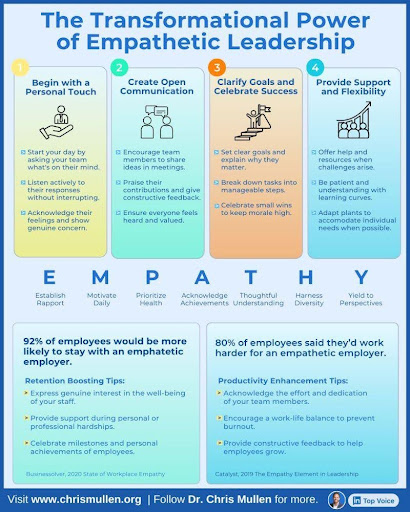
Human-centric leadership prioritizes empathy, communication, and empowerment, skills especially critical in remote and hybrid work contexts. Research indicates that organizations led by empathetic leaders see a 25% boost in engagement and a 30% improvement in innovation.
Transformational power of empathetic leadership
From hierarchies to agile, adaptive leadership
Modern leadership emphasizes agility, quick decision-making, iterative experimentation, and flexible responses to market shifts. ICTN’s closely matched source highlights that digital leadership requires inclusivity, transparency, and participative decision-making rather than top-down commands. Leaders must navigate remote teams, use digital tools to enhance collaboration, and embrace rapid change as a constant, not a disruption.
MIT Sloan reinforces this, noting that leaders must adopt emerging behaviours such as digital savviness and flexibility to remain effective in digitally driven markets.
AI-Augmented leadership: A new frontier
Technology isn’t just reshaping business models; it’s reshaping leadership itself. Korn Ferry reports that 71% of global CEOs believe AI will increase their leadership value, and leaders with strong digital competencies outperform peers in driving transformation and growth.
Meanwhile, ODE Management stresses that modern leaders must understand technology not just as an operational tool, but as a strategic force capable of shaping entire industries. This requires leaders to identify emerging trends, build employee capabilities, and steer their organizations toward digital maturity.
Values-driven leadership: purpose, ethics, and trust
Beyond skills and technology, the digital age demands purpose-driven leadership. Transparency and global connectivity mean employees expect leaders to uphold strong values, promote sustainability, and act ethically.
Research confirms that purpose-driven organizations outperform competitors by 42% and achieve 25% higher profitability when sustainability is integrated into strategy. MIT Sloan’s findings also underscore that integrity, ethics, and trust remain enduring leadership traits even as other behaviors evolve
What leadership looks like going forward
Leadership in the digital economy is defined by:
- Digital fluency: understanding emerging technologies and data analytics
- Agility: rapid experimentation backed by data
- Empathy: enabling human-centred cultures in hybrid environments
- Collaboration: flattening hierarchies and democratizing decision-making
- Purpose: aligning strategy with values and societal impact
These qualities reflect a departure from traditional leadership models and align with modern expectations for responsible, adaptive, and forward-thinking leadership.
Conclusion
Leadership has evolved dramatically, from rigid hierarchies and command-and-control structures to agile, empathetic, and technologically empowered models suited for the digital economy. Research from MIT Sloan, Korn Ferry, EBSCO, ICTN’s aligned source, and ODE Management paints a clear picture: leaders who embrace adaptability, purpose, collaboration, and technological insight will thrive in an era defined by constant change.
Reference List
- Biscontini, T. (2025) Digital economy. EBSCO Research Starters.
- Fudenberg, J. (2024) The evolution of leadership styles in the digital age.
- Korn Ferry (2025) Top 5 leadership trends of 2025.
- MIT Sloan Management Review (2020) The new leadership playbook for the digital age: Reimagining what it takes to lead.
- ODE Management (n.d.) Modern leadership styles reshaping the digital economy.
- Springwell & Associates (2025) 2025 Leadership Trends White Paper.