

In this rapidly changing business world, Artificial intelligence (AI) is changing the dynamics of business operations and industries. Strategic management transcends from just planning and decision-making as AI advances; it also means deploying AI technology to create differentiation. In this blog we will explore the opportunities and challenges of strategic management in AI age — along with what companies can do about it.
AI Strategy Management Applications
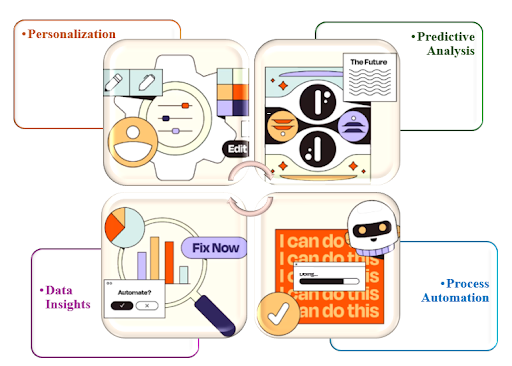
AI is changing the way companies strategize, execute and improve their strategy. AI breaks down into what the company can make more sense of market development trends and refines their strategy — from analytics to decisions. Strategic management in AI looks like this with the help of:
- AI-driven Insights: Using mass data, algorithms help businesses learn and discover new emerging opportunities, as well as threats by processing coarse grain statistical read-outs from huge data sets.
- Predictive analytics: By using historical data, AI can forecast future trends, facilitating efficient business planning.
- Routine Task Automation: AI enables executives to free up time for strategic decision-making by automating routine work.
AI’s Potential for Strategic Management
Businesses can benefit from using AI in strategic management in several ways.
- Better Decision-Making: AI enables faster and with information backed decision making through real time data and insight.
- Operational: AI will be able to automate the vast majority of the white collars that you do, things like accounting statements all the way to inventory control allowing businesses to do things better and faster with lower costs.
- Scale personalization: From making line items of AI that caters to the individual requirements of a customer to an extent where it can provoke customer loyalty and increase revenue escalations.
- New Business Models and Innovation: AI provides new fields for innovation. AI allows businesses to predict the future change and the next disruption it will offer, thus transition into new business models quicker than ever.
Impact of AI on Business Innovation and Efficiency
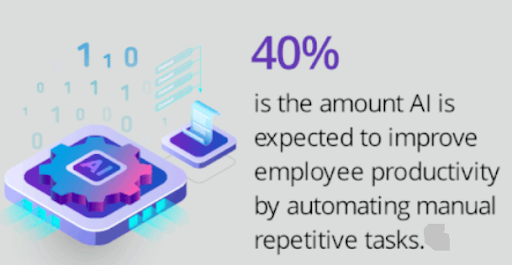
AI opens new avenues for creativity in business, through unique aspects of conversing machinery:
- To be able to convert into new models: AI enables a funnel to move from the trending and disruptions that is found new on trends/distribution.
- Enhanced Operational Efficiency: AI can automate many repetitive tasks, such as inventory management and accounting reports, which can improve business operations and save costs.
- Hyper Personalization: Businesses may use AI to deliver extremely personalized services and products as per the demand of each customer, thereby building sales and brand loyalty.
- Driving Innovation: New frontiers of innovation are made accessible by AI. Businesses can transform easily into newer models utilizing AI for realizing new trends as well as disruption.
Strategies for Overcoming Challenges
To effectively use AI in strategic management, businesses must adopt the following strategies:
- Invest in Employee Training: Train employees with the skill set to handle AI tools, making a smooth working environment.
- Adopt Ethical AI Practices: Make AI models transparent, fair, and unbiased, hence build trust among the company and customers.
- Collaborate with AI Experts: Collaborate with AI experts to embed AI technologies into current business processes to utilize AI efficiently.
Conclusion
In the AI era, strategic management presents both enormous opportunities and difficulties. Adopting AI in a People-centric way and harnessing the operational & creative potential for higher productivity within the organization that necessarily leads to success. Staying ahead of the curve so that businesses that can evolve to thrive in an AI future being one step ahead.