

Free Zones have emerged as strategic drivers of economic diversification, international trade, and entrepreneurship, particularly in the Gulf Cooperation Council (GCC) region. The United Arab Emirates alone hosts more than 40 Free Zones supporting over 45,000 companies across sectors such as logistics, technology, manufacturing, and finance.
While infrastructure and regulatory advantages attract businesses, the long-term success of Free Zones depends significantly on effective stakeholder relationship management. Free Zone professionals play a crucial role in coordinating interactions between regulatory bodies, investors, multinational corporations, and service providers.
Developing strong stakeholder relationships is therefore essential for ensuring sustainable growth, operational efficiency, and investor confidence.

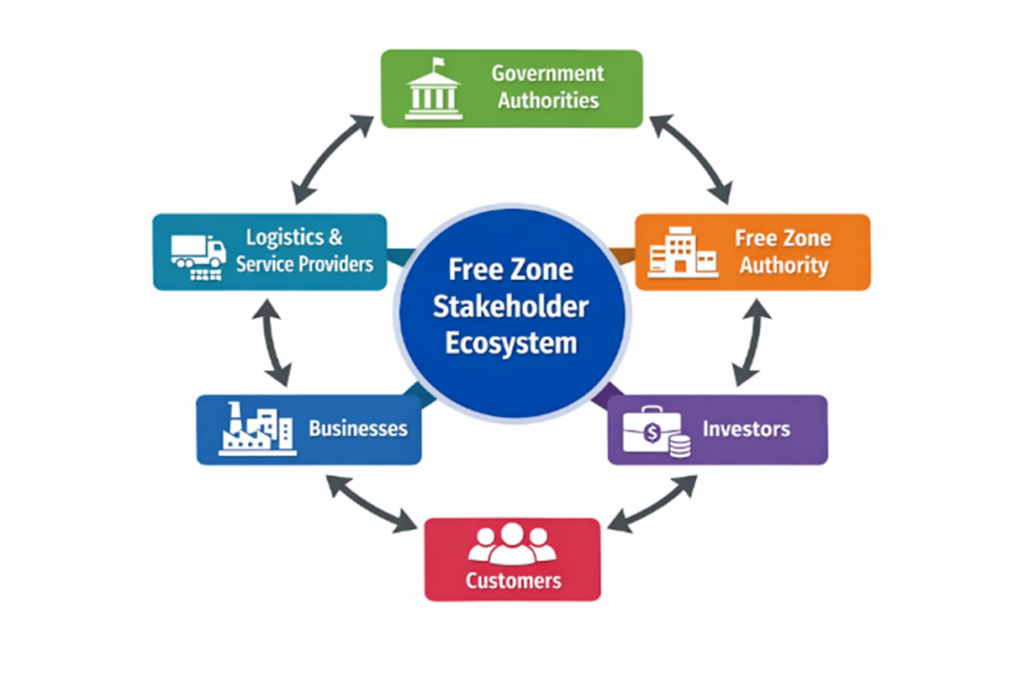
Understanding the Free Zone Stakeholder Ecosystem
Free Zone environments involve a diverse network of stakeholders whose interests must be carefully managed.
Key stakeholders typically include:
- Government regulatory authorities
- Free Zone administrative bodies
- International and domestic investors
- Multinational corporations and SMEs
- Logistics and supply chain partners
- Financial institutions and professional consultants
- Employees and service providers
Each group contributes to the Free Zone ecosystem while simultaneously expecting efficient services, transparent policies, and supportive business environments.
Infographic 1: Free Zone Stakeholder Ecosystem
The Strategic Importance of Stakeholder Relations
Stakeholder theory suggests that organizations perform more effectively when they actively engage with all groups that influence or are influenced by their operations. In the context of Free Zones, effective stakeholder engagement contributes to several strategic outcomes:
- Improved regulatory compliance and smoother operational processes
- Greater investor satisfaction and retention
- Enhanced collaboration between businesses within the ecosystem
- Strengthened institutional credibility and reputation
- Improved crisis response and risk management capabilities
According to industry reports from the World Free Zones Organization, Free Zones that adopt structured stakeholder engagement strategies often experience higher levels of investor loyalty and stronger economic impact.
Strategies for Strengthening Stakeholder Relations
1. Promoting Transparent Communication
Transparency is fundamental to building trust among stakeholders. Free Zone professionals must ensure that businesses and investors receive clear and timely information regarding:
- Regulatory updates and compliance requirements
- Licensing procedures and operational guidelines
- Infrastructure developments and policy changes
The use of digital communication platforms, stakeholder portals, and regular updates can significantly enhance transparency and accessibility.
2. Encouraging Collaborative Partnerships
Rather than focusing solely on transactional interactions, Free Zone authorities should promote long-term collaborative relationships among stakeholders.
This can be achieved through initiatives such as:
- Industry networking forums
- Investment promotion events
- Cross-sector partnerships
- Innovation and entrepreneurship programs
These initiatives encourage businesses within Free Zones to function as integrated economic communities rather than isolated entities.
3. Leveraging Data for Stakeholder Insights
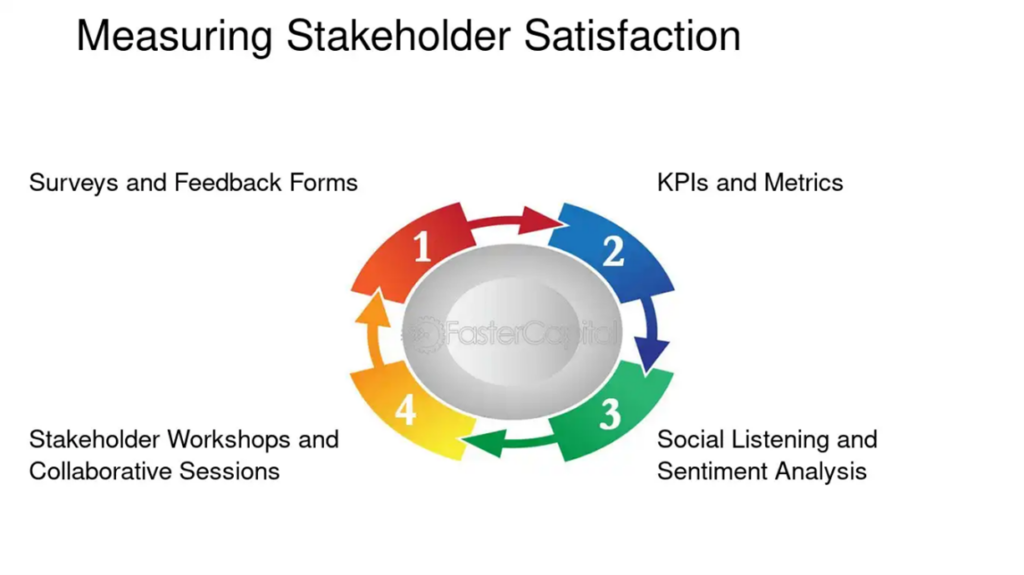
Modern Free Zone governance increasingly relies on data-driven management practices. By collecting and analyzing stakeholder feedback, Free Zone professionals can better understand the needs and expectations of businesses operating within the ecosystem.
Examples include:
- Investor satisfaction surveys
- Digital service usage analytics
- Business performance feedback systems
Such insights enable administrators to adapt policies and services more effectively.
Infographic 2: Key Drivers of Stakeholder Satisfaction in Free Zones
4. Developing Cross-Cultural Competence
Free Zones attract businesses from diverse geographical and cultural backgrounds. As a result, professionals working in these environments must possess strong intercultural communication skills.
This includes:
- Understanding international business practices
- Adapting communication styles across cultures
- Demonstrating cultural sensitivity during negotiations and collaborations
Such competencies enhance cooperation and reduce potential misunderstandings.
5. Supporting Innovation and Knowledge Exchange
Free Zones can further strengthen stakeholder relationships by promoting innovation ecosystems. This involves facilitating knowledge exchange between businesses, academic institutions, and industry experts.
Examples include:
- Innovation hubs and incubators
- Industry research collaborations
- Business mentorship programs
- Academic partnerships with universities
These initiatives contribute to the development of dynamic and knowledge-driven Free Zone economies.
The Future of Stakeholder Engagement in Free Zones
With the increasing digitalization of global trade and governance, stakeholder engagement within Free Zones is evolving rapidly. Emerging trends include:
- AI-powered investor support services
- Digital licensing and compliance systems
- Integrated smart governance platforms
- Data-driven business support services
Professionals who embrace these technologies while maintaining strong human-centered engagement practices will be best positioned to enhance stakeholder relationships.
Conclusion
Effective stakeholder relationship management is a critical success factor for Free Zones operating in today’s complex global business environment. By emphasizing transparent communication, collaborative partnerships, data-driven insights, cross-cultural competence, and innovation-driven ecosystems, Free Zone professionals can significantly strengthen stakeholder engagement. Such efforts ultimately contribute to enhanced investor confidence, improved economic performance, and the sustainable growth of Free Zone ecosystems worldwide.